Easy Baby Slippers: Free Crochet Pattern for Beginners
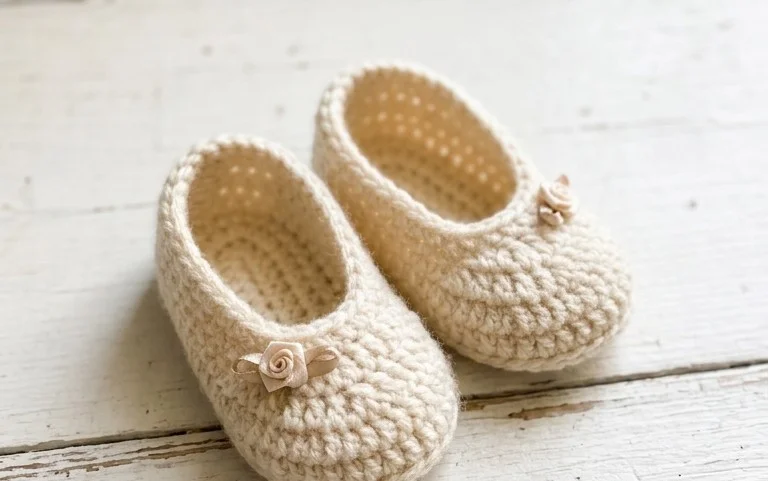
These tiny slippers feature a soft, flexible sole and a snug fit that stays on a baby’s wiggling feet without feeling restrictive. The construction uses basic chain and double crochet stitches, making it a satisfying afternoon project for anyone who has mastered the foundational techniques of yarn craft. I love how the yarn creates a dense fabric that feels warm against delicate skin while remaining light enough for indoor wear. You will find that working these little booties helps you practice consistent tension and shaping, which are essential skills for moving on to more complex garment projects later this season.
Why You’ll Love This Pattern
This beginner-friendly crochet coaster pattern uses simple single crochet stitches and a tight tension to create a durable, heat-resistant surface for your mugs. Because these coasters work up in under thirty minutes, they are ideal for using up leftover cotton yarn from larger projects. The circular design lays perfectly flat without curling, making it a reliable staple for your home or a thoughtful, quick handmade gift. You can easily adjust the size to make larger trivets by simply adding more increase rounds to the initial base.
I managed to finish a set of four in one afternoon, and the instructions were very clear for a beginner like me. The final result looks professional and handles condensation from cold glasses beautifully.
— Sarah, home crafter
Pattern Overview & Skill Level
- Skill Level: Beginner
- Approximate Time: 20–30 minutes per coaster
- Construction: Worked in continuous rounds from the center outward
- Finished Dimensions & Sizing: Approximately 4 inches in diameter
Materials & Supplies Needed
- Yarn: Worsted weight (#4) 100% cotton yarn, approximately 15 yards per coaster. Cotton is essential for heat resistance and absorbency.
- Hook Size: 4.5 mm / US 7
- Notions needed: Yarn needle for weaving ends, stitch marker to track round starts
- Safe yarn substitutions: Acrylic yarn is not recommended as it may melt under hot mugs. Linen or bamboo-cotton blends are excellent alternatives that offer similar heat resistance and structure.
Stitch Guide & Abbreviations (US Terms)
- ch = chain
- st/sts = stitch/stitches
- sc = single crochet: Insert hook, yarn over, pull up a loop, yarn over, pull through both loops on hook
- inc = increase: 2 sc in the same stitch
- sl st = slip stitch: Insert hook, yarn over, pull through stitch and loop on hook
- MR = magic ring: An adjustable loop used to start rounds
Step-by-Step Pattern Instructions
Main Coaster Body
Work in continuous rounds without joining unless specified. Place a stitch marker in the first stitch of each round to keep track of your progress.
- Rnd 1: Start 6 sc in a magic ring. Pull the ring tight to close the center hole. (6 sts)
- Rnd 2: Inc in each st around. (12 sts)
- Rnd 3: Sc 1, inc repeat around 6 times. (18 sts)
- Rnd 4: Sc 2, inc repeat around 6 times. (24 sts)
- Rnd 5: Sc 3, inc repeat around 6 times. (30 sts)
- Rnd 6: Sc 4, inc repeat around 6 times. (36 sts)
- Rnd 7: Sc 5, inc repeat around 6 times. (42 sts)
Finishing
Once you reach 42 stitches, do not add more rounds. Make one sl st into the next stitch to smooth out the edge. Cut the yarn, leaving a 6-inch tail. Use your yarn needle to weave the end through the back loops of the final round to create a seamless finish, then knot it securely on the underside. Pull the starting tail tight to ensure no gap remains in the center before weaving it in as well.
Care & Washing Instructions
- Machine wash on a gentle cycle in cold water using a mild detergent.
- Reshape the coasters by hand while damp and lay them flat on a towel to air dry.
- Avoid using fabric softeners, as these can leave a residue that reduces the natural absorbency of the cotton fibers.
Pro Tips & Common Mistakes to Avoid
Consistent tension is the secret to a flat coaster; if your stitches are too loose, the coaster will ripple, but if they are too tight, it will curl. Use a slightly smaller hook than recommended on the yarn label to create a dense, professional fabric. Always use a stitch marker at the beginning of every round to avoid miscounting, which is the most common cause of lopsided edges. If you wish to make a larger coaster for a teapot, simply continue the increase pattern by adding one additional sc between every increase in each subsequent round, though you will need more yardage.
Frequently Asked Questions
Can I use a different yarn weight for this pattern?
Yes, you can use DK or bulky weight yarn. Keep in mind that using a thinner yarn will result in a smaller coaster, while thicker yarn will produce a larger one. Adjust your hook size to ensure the fabric remains tight and dense regardless of the weight you choose.
Why is my coaster curling instead of laying flat?
Curling usually indicates that your stitch count is too low for the diameter of the circle. If your coaster refuses to lay flat, double-check that you have completed all necessary increases in every round. If it continues to curl, try going up a half-size in your crochet hook to loosen the tension slightly.
Is it okay to sell finished items made from this pattern?
Yes, you are welcome to sell physical items produced from this pattern. I ask that you provide credit to this design in your product listings, but you may not redistribute or sell the written pattern instructions themselves.
How can I make the coaster more absorbent?
Using 100% cotton yarn is the best way to ensure absorbency. Avoid blends that contain synthetic fibers like polyester or nylon, as these materials do not soak up liquid condensation from glasses and will cause moisture to pool on your furniture.
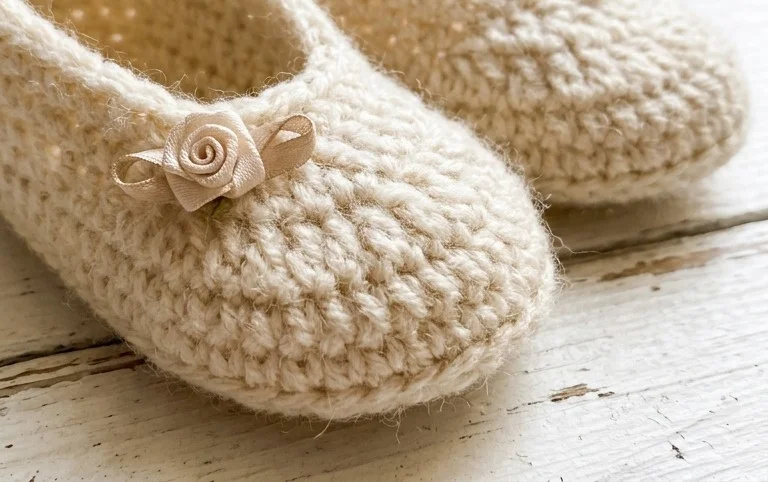
Your finished slippers now provide a cozy layer for tiny toes, especially when worked in a soft merino wool blend that adds extra warmth. If you want to customize these further, try adding a decorative satin ribbon through the ankle row or working them in a contrasting color for the cuff. Sharing photos of your completed projects helps others see how different color choices change the final look of the design. You can find more beginner-friendly items like matching hats or simple blankets by browsing the rest of the pattern collection on the blog.