Easy DIY Scarf with Tassels: Free Beginner Crochet Pattern
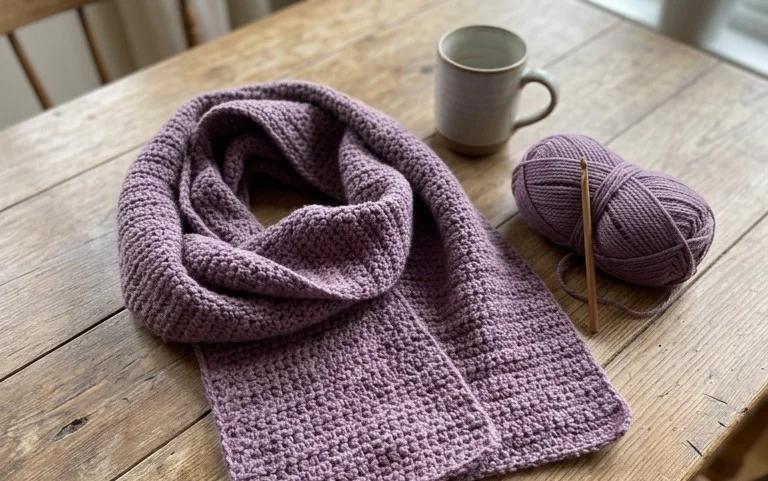
A cozy wrap with long, swinging tassels adds a personal touch to your cool-weather wardrobe, offering both warmth and a touch of handmade charm. This project uses basic chain and double crochet stitches, which makes the fabric light yet dense enough to protect you against a stiff breeze. Beginners will find the repetition rhythmic and meditative, while those who have finished many projects before will appreciate how quickly a full-length garment comes together. You can work with any soft wool or acrylic blend to create a result that feels soft against the skin. Learning to balance tension ensures those tassels hang evenly, creating a clean finish that looks like a store-bought accessory. Whether you are building your skills or just need a quiet evening activity, this design offers a straightforward path to a wearable gift.
Why You’ll Love This Pattern
This classic crochet dishcloth works up quickly using basic stitches, making it a perfect project for polishing your tension. Because it uses a simple combination of single crochet and chain stitches, it creates a textured surface that is ideal for scrubbing dishes or cleaning household surfaces. Cotton yarn provides the absorbency required for kitchen utility while remaining durable enough to withstand frequent trips through the washing machine. You can complete an entire set in a single evening, which makes this an excellent option for last-minute handmade gifts.
I managed to finish three of these during a long weekend trip. The texture is much better for scrubbing than a flat chain-stitch cloth, and the pattern is very easy to memorize.
— Sarah, home crafter
Pattern Overview & Skill Level
- Skill Level: Beginner
- Approximate Time: 45 to 60 minutes per cloth
- Construction: Worked in rows from the bottom up with a simple border
- Finished Dimensions: 8 inches by 8 inches
Materials & Supplies Needed
- Yarn: Worsted weight (#4) 100% cotton yarn, approximately 60 yards per cloth.
- Hook Size: 5.0 mm (US H-8).
- Notions: Tapestry needle for weaving in ends, scissors.
- Safe Yarn Substitutions: Any 100% cotton or cotton-linen blend in a worsted weight works well. Avoid acrylic yarn for dishcloths, as it does not absorb water and will not clean surfaces effectively. Substituting a lighter weight yarn will result in a smaller final size unless you increase your starting chain count.
Stitch Guide & Abbreviations (US Terms)
- ch: chain
- st(s): stitch(es)
- sc: single crochet
- sk: skip
- sl st: slip stitch
- YO: yarn over
- FO: fasten off
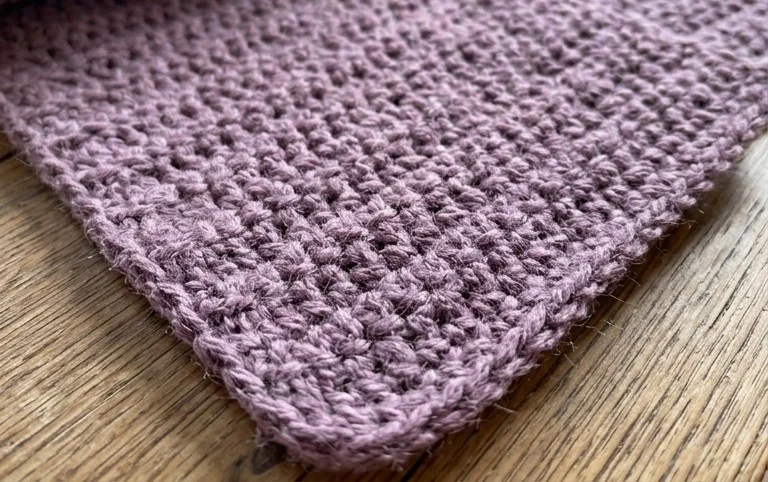
- Special Stitch: Seed Stitch—this is achieved by alternating single crochet and chain stitches to create a bumpy, raised texture that traps soap and grime effectively.
Step-by-Step Pattern Instructions
Dishcloth Base
- Foundation: Ch 30.
- Row 1: Sc in the 2nd ch from the hook, *ch 1, sk next ch, sc in next ch; repeat from * across until 1 st remains, sc in last ch. Turn. (30 sts)
- Row 2: Ch 1, sc in first sc, *ch 1, sk next ch-1 space, sc in next sc; repeat from * across. Turn. (30 sts)
- Rows 3-30: Repeat Row 2 until the piece measures approximately 8 inches square.
Border & Finishing
- Border: Do not FO. Ch 1, turn, and work 1 round of sc evenly around the entire perimeter of the dishcloth. Work 3 sc into each of the four corner stitches to ensure the edges lay flat without curling.
- Closing: Join with a sl st to the first sc of the round.
- Finishing: FO, leaving a 6-inch tail. Use the tapestry needle to weave the yarn tail securely into the back of the border to hide the end.
Care & Washing Instructions
- Machine wash in warm water on a gentle cycle to preserve the fiber integrity.
- Lay flat on a clean towel to air dry, which helps the cotton maintain its square shape.
- If the cloth appears misshapen after drying, lightly steam with an iron or mist with water and pull the corners into a square to reshape.
Pro Tips & Common Mistakes to Avoid
Maintain consistent tension throughout the project to keep the dishcloth edges straight; if your chains are too tight, the cloth will pull inward and lose its square shape. Use a stitch marker at the start of your rows to ensure you do not accidentally skip the final stitch, which is a common error that leads to a lopsided rectangle instead of a square. When weaving in your ends, run the tapestry needle under at least three different stitches in opposite directions to prevent the yarn from unraveling after a wash. To adjust the size, simply add or subtract an even number of chains to your starting row; keep in mind that adding width will require more total yardage of cotton yarn.
Frequently Asked Questions
Can I use a larger hook for this pattern?
Using a larger hook will make the fabric more open and airy, which can be useful for drying, but it will also make the cloth larger and less dense. For the best scrubbing power, stick to the recommended 5.0 mm hook.
Is this pattern suitable for complete beginners?
Yes, this is an ideal project for someone who has just learned the single crochet stitch. It requires no complex counting or shaping, and the repetition helps build muscle memory.
Can I sell the dishcloths I make from this pattern?
You are welcome to sell physical items made from this design, provided you credit the pattern source. Please do not sell the digital file or claim the design as your own.
Why does my cloth have a wavy edge?
Wavy edges usually occur if you are working your border stitches too tightly or putting too many stitches into the corners. If the edge ripples, try working fewer stitches along the sides or ensure you only put 3 sc in the corner spaces.
Your finished wrap is ready to keep you warm on brisk morning walks or breezy evenings outdoors. If you want to change the look, try using two strands of different colors held together to create a subtle heathered effect or adjust the chain count to make an oversized cowl instead of a traditional long style. Please share a photo of your work on social media so others can see your color choices. You can explore more beginner-friendly designs on the main blog page for your next project.