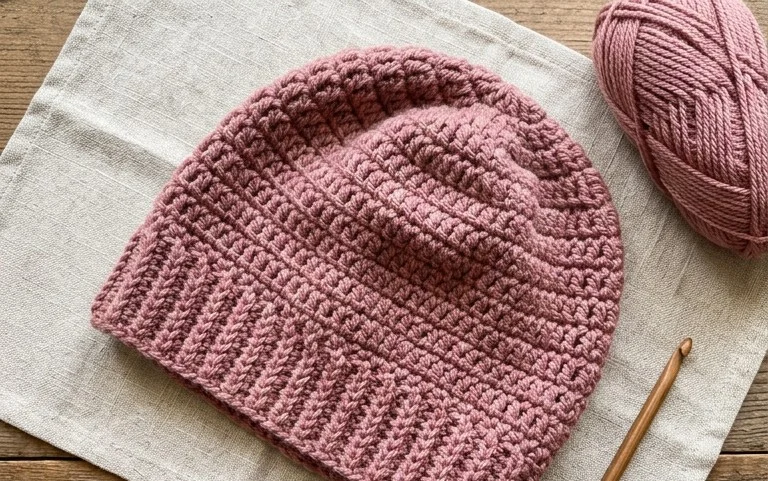
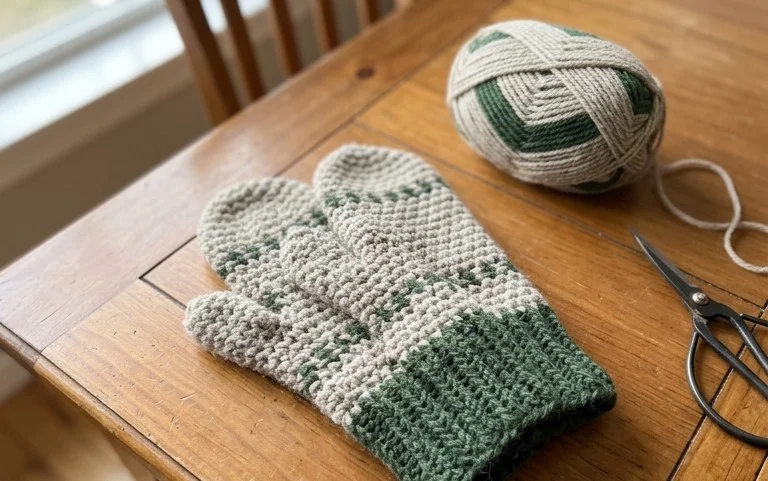
Easy Messy Bun Beanie Free Pattern: Step-by-Step Guide
This ponytail-friendly hat features a thick, stretchy ribbed texture that keeps your ears warm while letting your hair stay up in a high bun. Beginners enjoy the simplicity of the basic half-double crochet stitches that build height quickly without complex counting or shaping. You will finish this project during a single evening on the sofa, making it a reliable gift for friends who value utility as much as fashion. I love how the open center allows for custom sizing by adjusting the tension of the foundation chain. Learning to work in rounds creates a seamless look that holds its shape through many winters of daily wear.
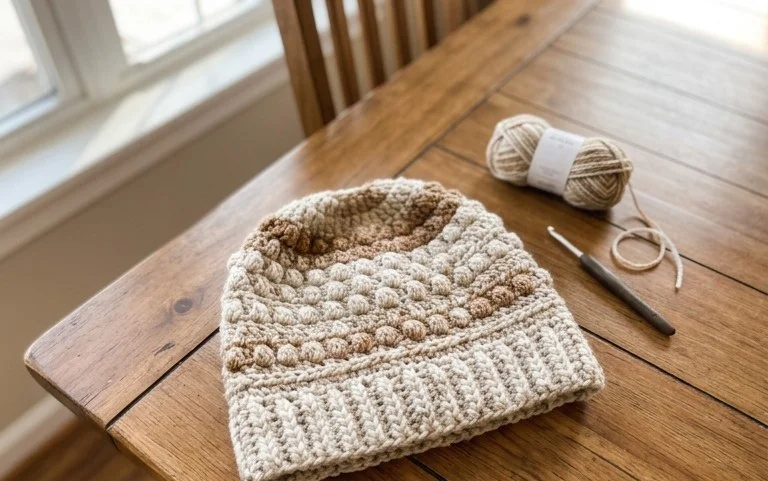
Why You’ll Love This Pattern
This classic crochet dishcloth is designed with a durable textured stitch that effectively scrubs away stuck-on food without scratching delicate non-stick cookware. The pattern relies on a repeating sequence of single and double crochet stitches, making it a meditative project for those who want to practice their tension while watching television. Because it works up quickly in under an hour, it serves as an excellent last-minute housewarming gift or a way to use up leftover cotton yarn from larger projects. The resulting fabric is absorbent, breathable, and designed to withstand repeated trips through the washing machine.
I managed to finish three of these during a single afternoon of gardening prep. The texture is exactly what I needed for my cast iron pans, and they wash up beautifully without losing their shape.
— Sarah, home crafter
Pattern Overview & Skill Level
- Skill Level: Beginner
- Approximate Time: 45–60 minutes
- Construction: Worked flat in rows with a simple turning chain
- Finished Dimensions: 8 inches by 8 inches
Materials & Supplies Needed
- Yarn: Worsted weight (#4) 100% cotton yarn, approximately 60 yards. Cotton is necessary for its absorbency and heat resistance.
- Hook Size: 5.0 mm (US H-8)
- Notions: Tapestry needle for weaving in ends, scissors, and a measuring tape to ensure your square remains even.
- Yarn Substitutions: You may use a cotton-acrylic blend, but note that this will significantly reduce the water absorbency of the dishcloth compared to 100% cotton. Avoid wool, as it will felt when exposed to hot water and frequent scrubbing.
Stitch Guide & Abbreviations (US Terms)
- ch: Chain
- sc: Single crochet
- dc: Double crochet
- st(s): Stitch(es)
- sk: Skip
- turn: Turn your work to begin the next row
- Moss Stitch: A technique involving a sequence of single crochet and chain stitches, creating a dense, woven-like fabric.
Step-by-Step Pattern Instructions
This dishcloth is worked in rows. You will start with a foundation chain and then build the texture through the moss stitch pattern.
- Row 1: Chain 32. Sc in the 4th ch from the hook, *ch 1, sk 1 ch, sc in the next ch; repeat from * across until the end. Turn. (16 sc, 15 ch-1 spaces)
- Row 2: Ch 2 (counts as ch-1), sk the first sc, sc in the next ch-1 space. *Ch 1, sk the next sc, sc in the next ch-1 space; repeat from * across, ending with a sc in the turning ch-space. Turn. (16 sc, 15 ch-1 spaces)
- Rows 3–30: Repeat Row 2 until the piece measures 8 inches from the starting edge.
- Finishing: Fasten off yarn, leaving a 6-inch tail. Use your tapestry needle to weave the tail back into the stitches on the back side of the cloth to secure it. Trim any excess yarn.
Care & Washing Instructions
- Machine wash in warm water on a gentle cycle with like colors to prevent dye bleeding.
- Lay the dishcloth flat on a towel to air dry, ensuring it is pulled into a perfect square shape while damp.
- Avoid using fabric softener, as it leaves a waxy residue on cotton fibers that prevents the cloth from absorbing water effectively.
Pro Tips & Common Mistakes to Avoid
Maintain consistent tension throughout the project by keeping your yarn tension steady in your non-dominant hand. If your tension is too tight, the dishcloth will become stiff and lose its flexibility, making it difficult to use for cleaning.
Use a stitch marker at the beginning of each row to help identify the turning chain. Beginners often skip the turning chain by mistake, which causes the edges of the dishcloth to decrease, leading to a triangle shape instead of a square.
Weave your ends in multiple directions. If you simply weave back and forth in a straight line, the end is likely to pop out after the first wash cycle. Moving in a “zig-zag” pattern through the stitches keeps the end locked firmly in place.
Adjust the size by changing your initial chain count. For every inch you wish to add, increase your foundation chain by approximately four stitches. Note that increasing the size will require additional yardage beyond the stated 60 yards.
Frequently Asked Questions
Can I use a larger hook to make this faster?
Yes, you can use a 5.5 mm or 6.0 mm hook. However, the fabric will be significantly looser, which makes it less effective at scrubbing and more prone to stretching out of shape during use.
How do I prevent the edges from curling?
The moss stitch is naturally stable, but if your edges curl, ensure your chain-1 spaces are not too tight. Blocking the finished dishcloth by dampening it and pinning it flat will also help set the edges straight.
Is this pattern suitable for beginners?
Absolutely. It uses only basic stitches and focuses on repeating the same motion, which is ideal for building muscle memory and learning how to identify stitch placement.
Can I sell the dishcloths I make from this pattern?
You are welcome to sell physical items made from this pattern. I only ask that you credit the designer and use your own original photographs when listing your items for sale.
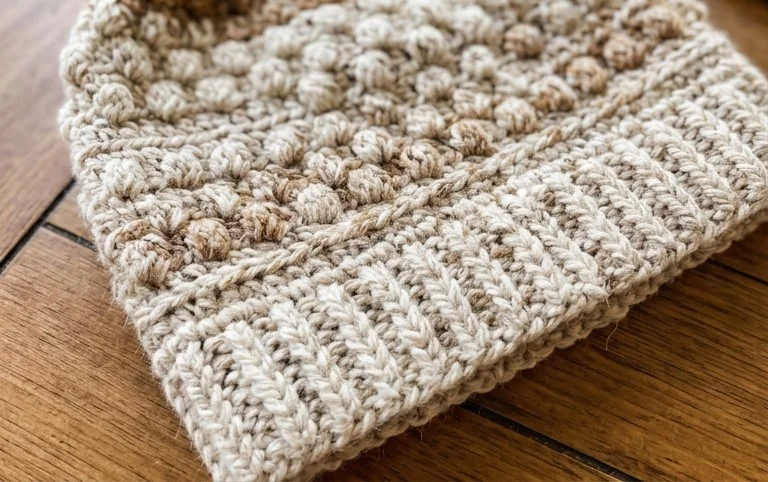
Your finished beanie provides a warm, functional accessory that handles messy hair days with ease. You can modify the fit by using a slightly thicker chunky yarn to create a more dramatic, oversized silhouette for extra slouchiness. If you have finished your first hat, take a photo and upload it to your favorite social media account to show off your color choice. Browse through the rest of the site for additional winter gear projects that require nothing more than a few hours and one skein of wool.